

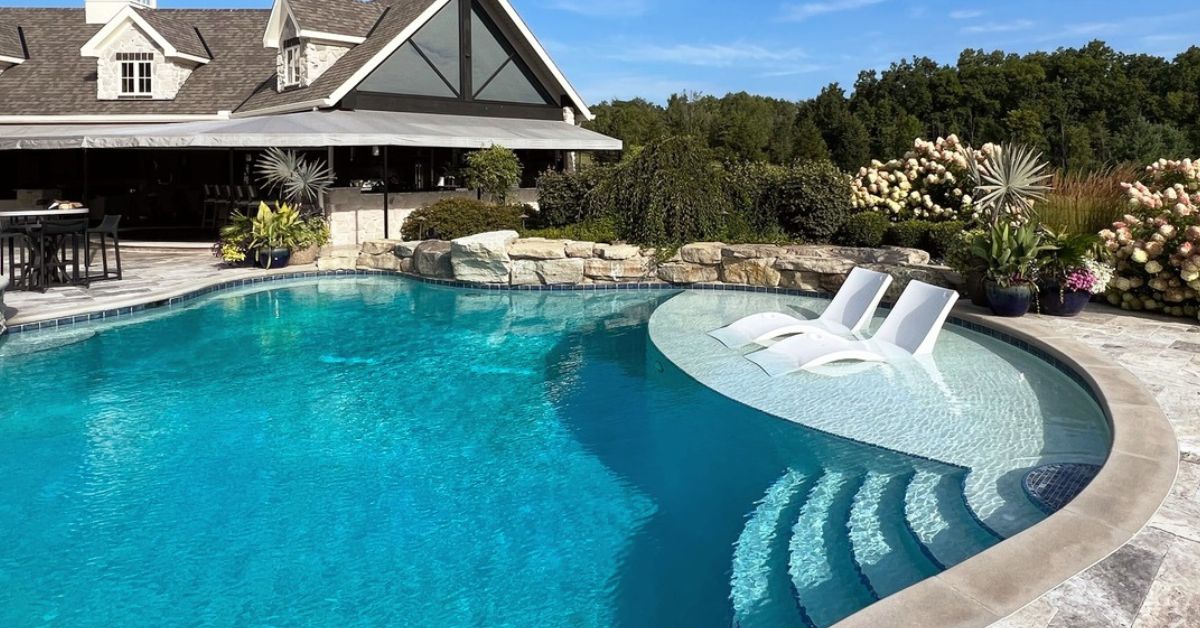
Building a swimming pool requires significant planning and investment. The pool’s surrounding area dictates the functionality and aesthetic appeal of the entire space. Your choice of pool decking determines how your family interacts with this installation and how the landscape integrates with your home.
Selecting the right material for your pool deck and surroundings involves more than just picking a color you like. You must evaluate safety features, maintenance requirements, and long-term durability. We will examine the most popular pool deck options available and help you determine the best fit for your property.
What Is a Pool Deck?
A pool deck acts as the transitional hardscape connecting the swimming pool to the rest of the yard. It encompasses the immediate border and extends outward to create usable living space. Builders construct these decks to withstand constant exposure to water and pool chemicals.
This surface must prioritize safety above all else. Swimmers exit the pool with wet feet, making slip resistance a critical safety factor. The deck must also resist heat absorption to prevent burning bare feet during the hottest parts of the day.
Proper drainage serves as another essential function of a well-designed pool deck. The surface should provide some drainage integration to prevent dirty water from washing back into the clean water. Effective drainage also keeps the deck surface dry and reduces standing water that could lead to algae growth.
Concrete
Poured concrete is the most common pool deck material due to its flexibility and durability. It can be poured into any shape, making it ideal for custom designs, and it withstands heavy foot traffic.
Standard broom-finished concrete provides excellent slip resistance, while stamped concrete can mimic more expensive materials like stone or brick. The main downsides are long-term maintenance, as concrete will eventually crack, and its high heat absorption, which can make it uncomfortably hot for bare feet in the summer.
Natural Stone
Natural stone, such as travertine, flagstone, and limestone, offers a sophisticated, timeless look with unique textures and colors. Travertine is popular because it absorbs water instantly, making it virtually non-slip, and light-colored stones stay cooler in the sun.
The primary drawback of natural stone is its high cost for both materials and installation, which requires skilled masons. Additionally, softer stones can erode over time, especially when exposed to salt water systems.
Tile
Unglazed tile is a highly customizable decking solution, allowing for intricate patterns and designs over a concrete base. Outdoor-rated porcelain and ceramic tiles are resistant to fading and chemicals. It’s crucial to choose unglazed or textured tiles for slip resistance, as glazed options become slippery when wet.
The main maintenance concern is the grout lines, which need regular sealing to prevent staining and mildew. Tiles can also crack in freezing temperatures if not installed correctly.
Pavers
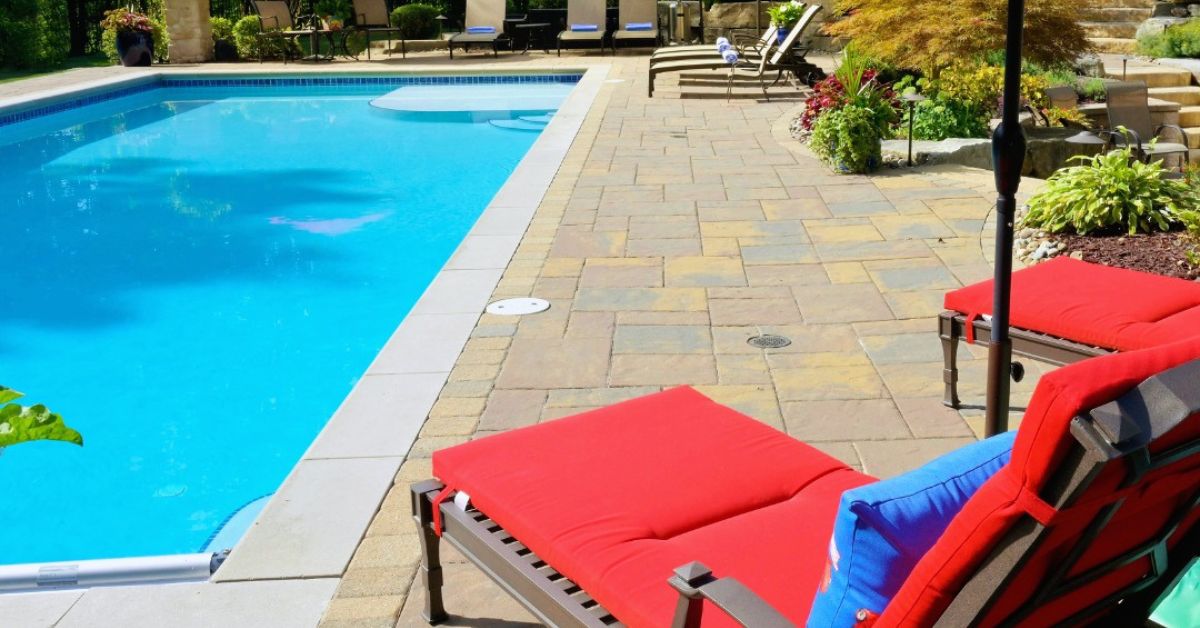
Pavers are individual concrete, brick, or stone units that interlock to form a flexible surface that resists cracking. This makes repairs easy and cost-effective, as you can simply replace individual stained or damaged pavers. They also offer excellent drainage.
On the downside, weeds can grow between the joints if not filled with polymeric sand. The installation process is also more time-consuming and can be more expensive than poured concrete.
Wood & Composite
Wood decking, often made from pine, cedar, or redwood, provides a warm, natural aesthetic and feels soft underfoot. However, real wood requires significant annual maintenance, including staining and sealing, to prevent rot, warping, and splintering.
Composite decking, made from recycled plastics and wood fibers, solves many of wood’s durability issues by resisting rot and insects. While low-maintenance, dark composite boards can get very hot in the sun, and the material isn’t as structurally strong as real wood for all applications.
Factors To Consider When Choosing a Material
Budget often dictates the final decision for pool decking projects. You must account for the square footage required and the cost per square foot of your desired material. Concrete and pavers usually fit mid-range budgets, while natural stone commands a premium price.
Your local climate plays a massive role in material performance. Homeowners in freezing climates should avoid porous materials that absorb water and crack when frozen. Conversely, those in hot climates must prioritize materials that reflect heat, such as light-colored concrete or pavers, to prevent burning feet.
Architectural style should guide your aesthetic choices. A modern home pairs well with the clean lines of large-format pavers or concrete. A rustic or traditional home may look better with the organic shapes of flagstone or the warmth of a wood deck.
Installation Tips and Safety Considerations
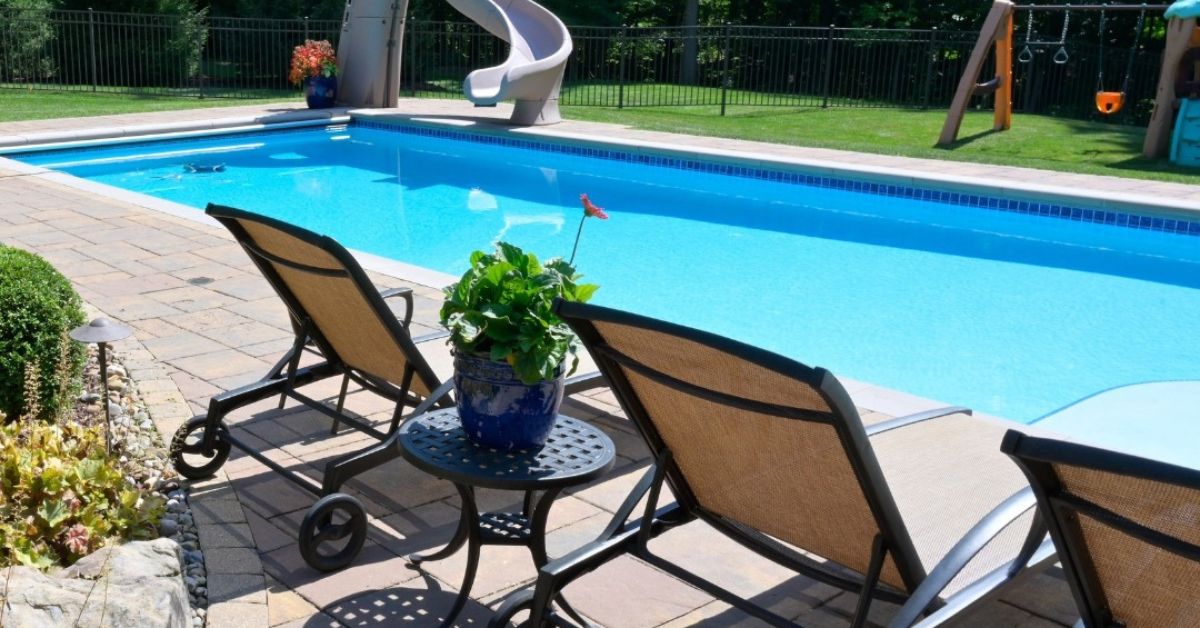
Proper sub-base preparation ensures the longevity of any pool deck. The ground beneath the deck must be compacted and leveled to prevent settling. Poor preparation leads to cracking, shifting, and drainage issues regardless of the surface material you choose.
Slope and drainage require precise calculation during the installation phase. Water must flow away from the pool and the home’s foundation. Installers typically incorporate channel drains or strip drains into the deck design to manage heavy rainfall or splash-out.
Safety features extend beyond slip resistance. You should avoid materials with sharp edges or rough textures that could scrape skin. Ensure that any transitions between different materials are flush to eliminate tripping hazards for children and elderly guests.
Enhance Your Outdoor Living Space
The right pool deck transforms a simple swimming area into a cohesive outdoor retreat. Your choice of material impacts the safety, maintenance, and visual appeal of your yard for decades. With many pool decking options to choose from, it’s important to consider your landscape, budget, space, and other factors.
Residents in Ohio looking to upgrade their backyard should contact the experts at Vizmeg Landscape. Our team offers pool construction in Hudson, OH, specializing in designing and constructing high-quality pool decking that elevates your outdoor living experience.
Consulting with an experienced landscape professional like Vizmeg Landscape helps clarify these options based on your specific terrain and lifestyle needs. Our expert installation ensures your investment withstands the elements and provides a safe environment for your family. Browse our gallery of poolside creations to see the impact a custom-designed pool deck can have on your backyard.
Leave a Reply